Sakkara
Necropolis in Sakkara is the most interesting place in Egypt. In the past, there was a necropolis of Memphis, where the peace of the dead was guarded by God with the body of a man and the head of a falcon; His name was Sokar. Today, the central part of the ancient cemetery in a radius of about 8 km belongs to the nearby village of Sakkara. This desert plateau today is a sea of rubble and sand, worn by deep trenches and strewn with mountains of broken pots. These are the traces of excavations that have been conducted here for more than a hundred years.
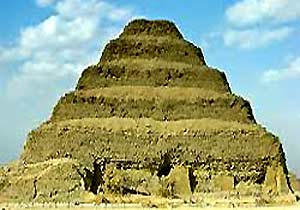
Above all the plateau dominates the giant step pyramid of Djoser, the first pharaoh of the third dynasty (2780 BC). This is the first monumental stone structure on earth. Here there are other royal tombs, some of them still older than a stepped pyramid.
The earliest are considered mastabas - the tombs of the first dynasty, excavated in the north of Sakkara by Professor Walter B. Emery in 1935-1956. These are large rectangular structures made of raw bricks. The ancient Egyptians believed that after death the deceased would live in the tomb itself or near it, and therefore the tombs were like models of the royal palaces. In the center of each such mastaba is a tomb, and around it - many small rooms, where food was stored for the afterlife of the deceased. The deceased monarch was accompanied to the world by a different slave and palace servants. WB Emery discovered around the individual tombs a number of modest burials, in each of which lay the skeletons of the murdered people. This barbarous custom soon disappeared, because, in the following period instead of servants, small figurines (defendants) began to bury, which replaced the real servants.
In Sakkara, many tombs of the first dynasty were discovered. Some kept the names of the pharaohs of Gorah, Jer, Wajji, Udemu. However, Flinders Petri discovered tombs with the names of these same pharaohs in Upper Egypt, in Abydos, so it is still unknown where they are actually buried - in Abydos or in Saqqara. It is known that at that time the pharaohs usually had two tombs - one in the north, the other in the south, which symbolized their dual authority over Lower and Upper Egypt. Professor WB Emery believed that the real pharaohs of the first dynasty were buried in Saqqara, and in Abydos only their cenotaphs-false burials remained.
All these tombs in Sakkara were looted in ancient times, like most Egyptian burials. Archaeologists managed to find in them only stone vessels, the remains of funeral utensils, fragments of gilding that once covered the walls of the central rooms. The clay walls of the mastaba store traces of heat: probably once there were fires raging here. Who could have burned the tombs of the deceased pharaohs in Saqqara? Either their enemies, or those who wanted to expel, thus, the spirit of the deceased and use his burial vault for his own burial. In ancient Egypt, this was done quite often.
