Maspero and the "lost pharaohs"
The successor of Opost Marietta as Director of the Egyptian Service antiquities became the French Egyptologist Gaston Maspero (1846-1916).
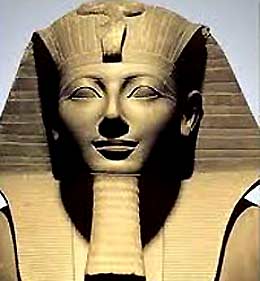
One of the first discoveries of Maspero in Egypt was a unique pyramid with hieroglyphic texts. This was a sensation, since no one ever found any inscriptions in the Egyptian pyramids. In 1880, Gaston Maspero managed to penetrate the heavily damaged pyramid in the south Sakkara. Penetrating into the funeral chamber, he saw on the walls of the tomb hieroglyphs! They covered all the inner premises of the tomb. Subsequently, the decipherment of the texts showed that it was the tomb of Pharaoh Piopi the Second from the second dynasty.
Encouraged by this discovery, Maspero began exploring other pyramids at Saqqara. In 1881 he discovered and explored the pyramids of the last king of the fifth dynasty of Unis, the king of the sixth dynasty of Aunt and the tomb of his successors. In all these pyramids, the scientist again discovered numerous hieroglyphic "texts of the pyramids."
It took several years to copy and publish the "texts of the pyramids". Even more time was spent on deciphering the "texts of the pyramids." Their language proved to be very heavy and archaic. The "texts of the pyramids" written in this language contained ritual formulas and spells, which were probably pronounced during funeral ceremonies.
Another name of Maspero is another find of 32 mummies - the so-called "lost pharaohs". July 5, 1881, having overcome a long way through the rocks, the employee Maspero Brugsh stood in front of a small hole in the rock. It was the entrance to the tomb. The hole was very cleverly camouflaged with stones. Under the stones was dug a mine 12 m deep. From here an underground passage of about 60 m led them into a roughly carved burial chamber. Here at Brugsha the spirit was disturbed with excitement - in the light of the torch before him opened the stone sarcophagi of the great "lost pharaohs" of the New Kingdom.
Here rested the famous Thutmose the Third and Ramses the Second, Jahmes the First, Amenhotep the First, the Network First. Here also rested those "lost pharaohs" whose names flashed in the history of Egypt, like comets, and those whose names were not known to science at all. The sarcophagi lay haphazardly, alternately, some of them were open, and among the piles of utensils and ornaments, blackened mummies were seen. No one has ever seen anything like this! In total, the remains of forty "lost pharaohs" were found in the hiding place!
How, then, did the "lost pharaohs", whose tombs scientists had previously found empty, found themselves in one common heap. The reason for all were ubiquitous robbers. By the 11th century BC the remains of the pharaohs, deified during their lifetime, long ago ceased to arouse the holy awe of the Egyptians, who now looked at the royal tombs as a source of enrichment. And then, by order of the High Priest of Herichor, about 1110 BC ascended to the throne, a special cache was built in Deir el-Bahri, to which the mummies of the ancient pharaohs were transferred. Many mummies were moved in great haste - archaeologists found them just leaning against the wall. Nevertheless, the builders of the hiding place had time to carve hieroglyphic "texts of the pyramids" on the walls of the tomb, informing about the events connected with the transfer of mummies from the Valley of the Kings.
