Generations of computers
How did human thought come to modern understanding of computer technology, and what generations of computers played a decisive role in this? The answers to these questions are of interest to all who plunged into the world of digital technologies.
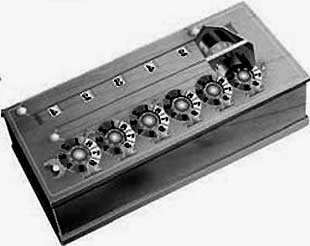
And it all began in 1642, when the French scientist Blaise Pascal built the first mechanical calculating machine that performed operations of addition and subtraction. The operations of multiplication and division could already be done by another mechanical machine, built in 1672 by the German mathematician Gottfried Leibnitz. For the first time the machine working under the program was developed in 1834 by the English scientist Charles Babbage. It contained a memory device, a computing device, a card input device and a printer. The machine sold any programs recorded on a punch card.
At the heart of the first electronic generation of computers (1945-1955) were electronic lamps, which provided a high computational speed in comparison with an electromechanical relay. But the electron tubes worked with voltages of tens of volts and consumed a lot of energy, so the power consumption varied from a few to hundreds of kilowatts, which was often the cause of the lamps overheating. The speed of processing information in tube machines ranged from several hundred to several thousand operations per second.
In 1948, a transistor was invented, differing from electron tubes with small dimensions, low supply voltage and low power consumption. He formed the basis of the second generation of computers (1955-1965). This allowed to dramatically increase the functionality and speed of computers to hundreds of thousands and even millions of operations per second. The increase in productivity was also ensured by the introduction of several processing devices in the computational machine, working in parallel. There appeared large companies producing computers for a wide range of purposes: IBM, SDC, DEC, etc.
The era of the third generation of computers began in 1958, when an attempt was made to place all components of a single functional node in a single semiconductor crystal. So there were integrated circuits (IC), which allowed to dramatically reduce the size of semiconductor circuits and reduce the power consumption. Increasing the speed of nodes built on the IP, allowed to bring the speed of computers to tens of millions of operations per second.
Using the latest scientific and technological achievements, scientists have succeeded in placing on a single crystal a few square millimeters in size, first hundreds, then thousands and finally millions of transistors and other electronic components. Such integrated circuits are called first large integrated circuits (LSIs), and then super-large integrated circuits (VLSI). Since 1980, single-board computers have appeared, containing all the functional blocks of the computer, the cost of which has fallen so much that the possibility of their acquisition by individuals has appeared. This opportunity was used by English engineers Steve Jobs and Steve Wozniak. Using functional parts produced by industry: a micro-computer board with a processor and memory, a keyboard, a display, they assembled a cheap desktop computer-a microcomputer. This microcomputer was called Array and became the world's first personal computer.
Some experts distinguish the fifth, sixth and subsequent generations of computers, which is very conditional. All because the core of these microprocessor systems is still VLSI.
