Antes
The Gothic historian of Jordan, who wrote his works in the middle of the 6th century AD, as well as the Byzantine historians of the end of the same century, were defined by two groups of Slavs who lived in the south of Europe - sklaviny and antes. According to them, it turns out that the first were the western, and the second - the eastern branch of the Slavs. Who were the antes?
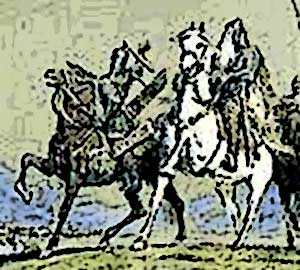
Some Ukrainian historians, for example, M. Grushevsky, represented Antes as the ancestors of Ukrainians. According to the Byzantine historian of the 6th century Procopius, the Ants settled the expanse between the Danube and the Don up to the Azov Sea. Archaeological excavations show that between the 4th and 5th centuries AD they really lived between the Dnieper and the Dniester, and in the 6-7 centuries settled in large areas between the Danube and the Siversky Donets.
The word "anta" is of Iranian origin and denotes people living on the border, on the outskirts. They were such for the Iranian-speaking inhabitants of the Northern Black Sea region, since for them the antes lived on the borders of the Slavic world with the Scythians and Sarmatians. The historian V.Sedov considers them to be Iranized Slavs, that is, Slavs who assimilated the remains of the Scythian and Sarmatian peoples. Czech Slavist L. Niderle and Russian archaeologist O. Spitsyn considered Antes as ancestors of the southern group of Eastern Slavs. Their assumptions are confirmed by archaeological excavations, which show the monuments of material culture of Antes in the south of Ukraine, and in Romania, Bulgaria, the Czech Republic and Slovakia. That is, the ants were part of not only the eastern and southern Slavs, but, perhaps, also part of the western, since the formation of ethnoses in the early Middle Ages occurred in the constant movement and mixing of tribes.
We know about the life of the Antes from the works of Byzantine historians. Antes are shown as tall, fair-haired, strong people. They easily overcome difficulties and adversities. According to Procopius, the ants were ruled not by the leader, but by the people's government-the elders. Although the "History of the Goths" of Jordan, and described the union of the tribes of the Antes, led by the leader of God. The Ante warriors were strong and courageous. They quickly learned how to fight the Byzantines, taking their ways into warfare. In the 6th century AD. Antes constantly threatened the northern borders of Byzantium, at times reaching in its campaigns to its capital - Constantinople.
